Fuelling the big climbing days of gravel cycling in the Alps
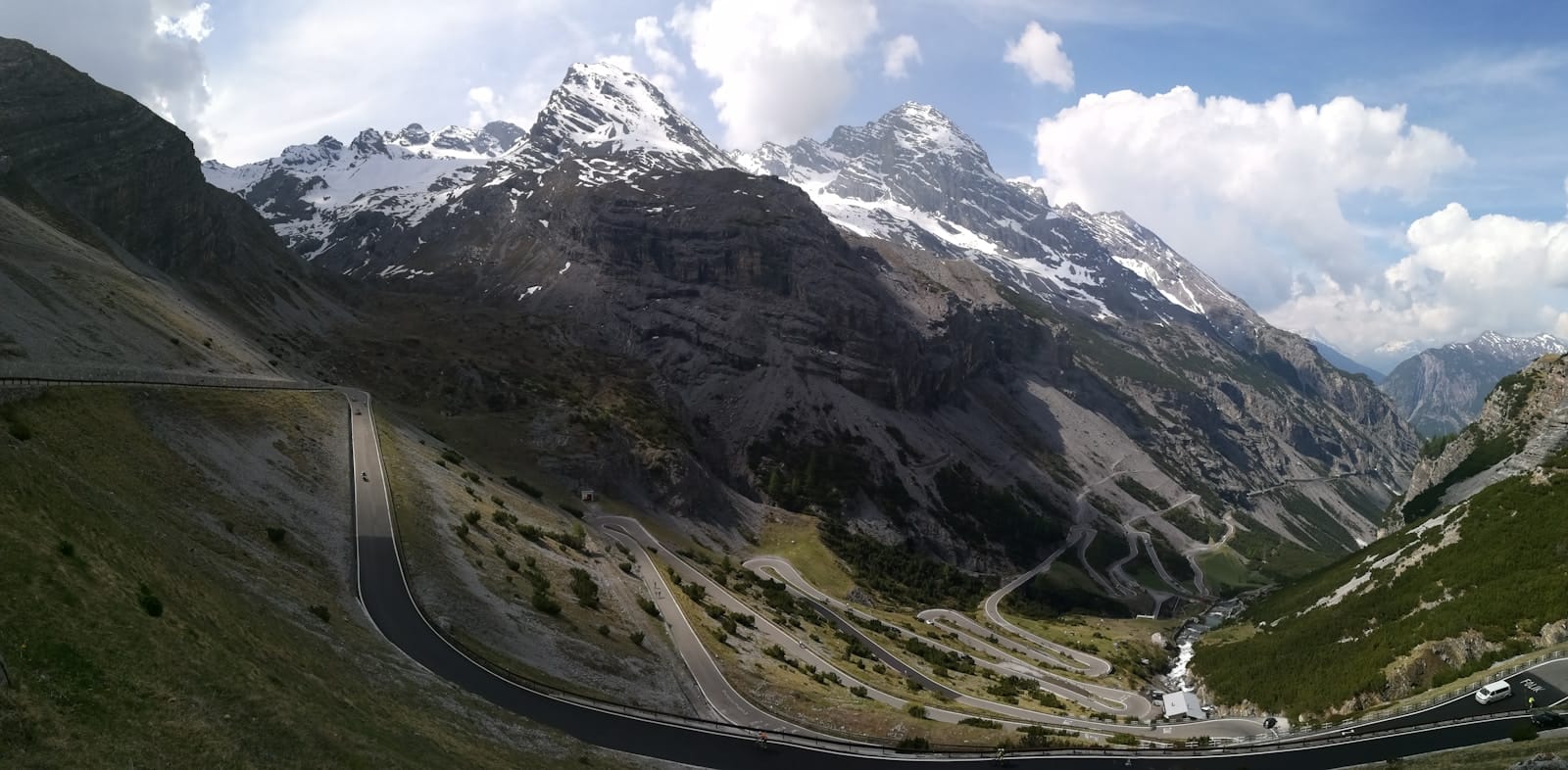
On the fourth morning of a Trans Alp week, somewhere around the thirtieth of the Stelvio’s forty-eight numbered hairpins, you can generally tell who ate properly at breakfast and who didn’t. It isn’t about pace — almost everyone is moving slowly up there, because almost everyone should be. It’s about who’s still talking. The well-fuelled rider comments on the view, counts the stone hairpin markers, has breath left for a joke about the gradient. The under-fuelled rider went quiet a few switchbacks back, is staring at eight metres of road ahead of the front wheel, and has stopped answering questions that need more than a nod. Their legs aren’t finished. Their fuel is, and on a climb this long that distinction matters more than it would almost anywhere else.
Fuelling for a week of alpine gravel is a different problem from fuelling for a single hard ride, and it’s a different problem again from fuelling for a hot, flat week somewhere like the Karoo. The climbs are longer and more sustained than most riders have practised eating through. The temperature swings hard, twice a day, between valley warmth and col-top cold. And the whole thing happens inside a week where the reward for a good stage is another stage tomorrow, with only one rest day — in Merano — to make up for anything you got wrong earlier. This is a guide to eating and drinking specifically for that: the long alpine climbs, the cold descents that follow them, and the accumulating demands of five riding stages spread across a crossing of four countries. It complements our broader gravel cycling nutrition guide, which covers the general rules of multi-day fuelling; here we’re narrowing in on what changes when the road goes up for ninety minutes at a time and the air gets thin and cold at the top of it.
What an alpine climbing day actually asks of you
The Trans Alp Gravel crossing runs eight days from Füssen in Bavaria to Riva del Garda on Lake Garda, with five riding stages, a rest day in Merano, and somewhere between 8,000 and 9,200 metres of climbing across the week depending on which route option you take each morning. That number is honest but slightly misleading on its own, because it isn’t spread evenly. Day three climbs 1,980 m from Imst to Nauders. Day four — Nauders to Merano — carries 1,000 m on the Adventure route or 2,200 m on the Explorer route, which adds the Stelvio Pass. Day six, straight after the rest day, asks for another 1,900 m from Merano into Trentino. Three of the five stages do most of the week’s real work, and two of them arrive back to back before you get any rest at all.
What makes a stage like this different from a hard day at home isn’t the total climbing — plenty of riders have done 1,900 or 2,000 metres in a day somewhere flatter and more forgiving. It’s the shape of the effort. A gravel ride at home is usually a series of shorter efforts strung together with recovery in between: a climb, a descent, a flat section to eat and settle. An alpine pass doesn’t offer that rhythm. Once you’re committed to the Stelvio’s northern face, you’re in a sustained 60- to 90-minute effort with almost nowhere flat to recover on, at altitude, with the gradient rarely dropping below what keeps your heart rate up the whole way. That single continuous demand is what most riders haven’t actually practised fuelling through, and it’s the reason a rider who copes fine with a normal century can still find themselves running empty on a pass a fraction of that distance.
Fuelling before the climb starts, not once you’re on it
The single biggest mistake on a big alpine day is treating the climb as the moment to start thinking about fuel. By the time the gradient properly kicks in, your options have narrowed and your margin for error has shrunk.
Start with breakfast. On any stage that includes a major climb, eat a proper carbohydrate-rich breakfast about 1.5–2 hours before rolling out — porridge or muesli, bread, eggs, fruit, and coffee if that’s your habit. This isn’t a nice-to-have on a day like Nauders to Merano; it’s the foundation the whole stage is built on, because you want to arrive at the base of the climb with a full tank, not a half-empty one you’re hoping to top up on the way. Breakfast is included every morning on the tour, and the hotels along this route lay on exactly the generous, carbohydrate-forward spread a big climbing day demands — the job is simply to eat enough of it, which is easier said than done when nerves about the day ahead can dull appetite.
Then treat the approach to the climb as your last comfortable chance to eat solid food. On the run into a sustained pass, the road is still gently rolling or flat enough to eat a filled roll, a banana, a proper mouthful of something — do it here. Once you’re committed to a long run of hairpins, your gut has less spare blood to spare for digestion and your breathing makes chewing awkward, so solid food gets harder to manage exactly when you might feel like reaching for it. Riders who wait until they’re three hairpins from the top to remember they haven’t eaten in ninety minutes are the ones going quiet by hairpin thirty.
The day that matters most: Nauders to Merano
If there’s one stage to plan your fuelling around specifically, it’s day four. On the Adventure route it’s a relatively contained 90 km and 1,000 m, taking in the high-alpine views over the Reschensee before a long descent into South Tyrol. On the Explorer route it’s 125 km and 2,200 m — nearly double the climbing of the Adventure line — because it adds the Stelvio Pass, climbing to 2,758 metres, the highest paved pass in the Eastern Alps, before the same long run down into Merano.
That extra 1,200 m sits almost entirely in one continuous effort, and it’s worth fuelling for on its own terms rather than folding it into your general plan for the day. In practice that means: eat properly at the Reschensee area before the climb proper begins, since the approach still offers a chance for solid food; switch to gels, chews or a carbohydrate drink once you’re into the sustained hairpins, aiming for small, frequent hits every 15–20 minutes rather than one large feed you’re hoping will carry you to the top; and don’t ration — this is exactly the effort our general nutrition guide’s “40–70 g of carbohydrate per hour” range is built for, and on a 60–90 minute continuous climb you want to be near the top of that range, not the bottom.
The gravel high points on the wider crossing generally sit between roughly 1,800 and 2,500 metres, so day four isn’t the only stage where altitude is a real factor — but it is the one where the combination of altitude, sustained gradient and distance from the support vehicle is most pronounced. Explorer riders on this stage may be genuinely further from help than on any other day of the week, which is one more reason to arrive at the base of the Stelvio already well fuelled rather than planning to catch up on the way.
Eating for the cold, not just for the effort
It’s easy to think of fuelling purely in terms of energy expenditure — climb hard, burn a lot, eat a lot. On an alpine crossing there’s a second demand that’s just as real and far more often ignored: staying warm.
Climbing generates its own heat. However cold the air, a sustained effort up a pass keeps you comfortable, sometimes uncomfortably warm, because your muscles are producing heat faster than the wind can strip it away. Descending removes that mechanism entirely. The moment you crest a col and start down, you stop generating heat through effort at precisely the point the wind chill from moving fast is at its worst — and on the Stelvio’s descent into Merano, that’s a long way down, at real speed, from a cold, still summit into South Tyrol’s warmth. The tour’s own route notes are blunt about the range this creates: temperatures swing from 5 to 25°C in a single day between valley stages and high passes, and air temperature drops roughly 6–7°C for every 1,000 metres of ascent on top of whatever the wind is doing.
The practical fix is to eat before you start down, not after you’re already cold. A dense bar, a filled roll, whatever you’ve got left in a jersey pocket — eaten at the summit board, before the descent, rather than saved for “when you’re hungry.” A body that’s cold and depleted burns fuel just to maintain core temperature, on top of whatever the ride itself is asking, and it’s a great deal harder to eat well once your hands are stiff and your teeth are chattering at a café stop in Merano than it would have been two minutes earlier at 2,758 metres with warm legs and a working brain. This is the same logic behind our packing guide for the Alps — the layers and the fuelling are solving the same problem from two different directions, and neither one alone is enough.
Altitude, appetite and why you have to eat even when you don’t feel like it
Altitude does something unhelpful to a lot of riders: it dulls appetite. It’s a well-documented, generally mild effect at the moderate altitudes this route reaches — most people notice it as a vague reluctance to eat rather than genuine nausea — but it’s exactly the wrong moment for your appetite to go quiet, because these are the days you’re spending the most energy all week. The fix is simple in principle and easy to forget in practice: eat on a schedule, not on hunger. If you wait to feel like eating at 2,400 metres on a cold morning, you may wait until it’s too late to matter.
The same altitude that dulls appetite also increases how much moisture you lose simply through breathing hard in cool, dry mountain air — on top of whatever you’re losing through sweat. That’s a second, quieter reason riders can arrive at a col more dehydrated than the temperature alone would suggest; a cool day doesn’t feel like a day you need to drink hard on, and that instinct is worth overriding on the bigger climbs. Altitude sickness itself is rare below 3,000 metres and this route climbs gradually enough that it’s an uncommon concern — the practical issue for almost every rider is simply appetite and thirst quietly under-reporting what your body actually needs, not acute altitude illness.
Fuelling the days either side of the Stelvio
Day four gets the attention, but days three and six ask something similar and are easy to underrate precisely because they don’t have a famous pass attached to them. Day three, Imst to Nauders, climbs 1,980 m — genuinely more than the Adventure route’s day four — building steadily to the three-country corner of Austria, Switzerland and Italy near Nauders, and it arrives before you’ve had any rest at all. Day six, Merano to Tuenno, climbs 1,900 m back to altitude through Trentino wine country, straight after the rest day — on legs that had a day off but a body that hadn’t reset the accumulated fuel deficit of the first four stages.
That second point is the one riders most often miss. A rest day restores you; it doesn’t automatically erase a week of under-fuelling. If days two through four were eaten well and slept off properly, the Merano rest day — thermal baths, café culture, good food, an optional easy ride — sends you into day six genuinely topped up. If the first half of the week ran a quiet deficit, one day off isn’t enough to fully close it, and day six’s 1,900 m can feel harder than day three’s 1,980 m did, for reasons that have nothing to do with fitness. Use Merano properly: eat well, rest properly, and treat it as the week’s genuine reset rather than just a day to sightsee on an empty tank.
Hydration on the high stages
Water alone isn’t the whole answer on a cool alpine day any more than it is on a hot one, even though the instinct to drink less when it’s cold is strong. You’re still sweating hard on a sustained climb, and you’re losing extra moisture through respiration in the dry mountain air, so electrolytes — sodium above all — matter on the big climbing days just as they do in real heat. Put electrolytes in at least one bottle on any stage with a major pass, drink to a schedule rather than to thirst (thirst is an even less reliable signal at altitude than it is at sea level), and use the lunch stop to properly reset your bottles rather than topping up on the move.
The support van’s free PurePower energy drink refill, available most days at lunch, does a lot of this work for you — one less thing to plan around on a day that already asks a great deal of your attention on technical descents and long climbs.
How a supported week makes this easier to get right
Everything above is achievable on a self-organised trip too, but a supported, hotel-to-hotel week removes a lot of the friction that makes alpine fuelling go wrong in the first place. Breakfast is included every day of the tour, a genuine carbohydrate-rich spread built for cyclists facing a big stage, not something you have to shop for or skip when a hotel’s options are thin. The support vehicle meets the group most days at lunch, where you can refill your PurePower energy drink free of charge and buy bars or chews if you’ve run low, and it carries your luggage hotel to hotel, so a personal stash of the specific gels and bars your gut trusts travels with you without adding weight to the bike. Dinner is included on six of the seven nights, including the recovery meal after both of the week’s biggest climbing days, and the rest day in Merano gives the whole week a genuine mid-point reset rather than asking you to push straight through.
What stays your job on a climbing day is the discipline: eating on a plan rather than on hunger, especially once altitude starts dulling your appetite; fuelling the approach to a big pass before the gradient makes solid food awkward; and eating before you descend, not after you’re already cold. None of that requires a support crew — it requires deciding, before you reach the base of the Stelvio, that you’re going to eat like the climb matters, because on this particular pass it genuinely does.
If you want to put this into practice, we ride the Stelvio on the Explorer route of the Trans Alp Gravel crossing — guided or self-guided, with the support van meeting you at lunch on the high stages and your bag already waiting in Merano by the time the temperature has changed for the second time that day. Read how our tours work for the full picture of what’s included, and look over the levels to see how the Adventure and Explorer options split the week’s biggest climbing days.
Questions riders ask
How is fuelling for an alpine climbing day different from a normal long ride?
The climbs are longer and more sustained — the Stelvio option on day four is a continuous 60–90 minute effort near the top of the day's 2,200 m — and they sit inside a week where you climb again tomorrow. That combination means you can't fuel to survive one big effort and recover on a rest week afterwards, the way you might for a single sportive. You have to fuel to be strong again at breakfast, five days running, with only one rest day in Merano to help you catch up.
What should I eat before and during the Stelvio climb?
Start the day genuinely full — a proper carbohydrate-rich breakfast, eaten with enough time to digest before rolling out of Nauders. On the climb itself, treat the lower slopes as your last easy chance to eat solid food, since a sustained hairpin gradient leaves little spare capacity for chewing; from there, lean on gels, chews or a carbohydrate drink taken little and often rather than saving your fuelling for the top.
Does altitude change how much I need to eat or drink?
Yes, in two ways worth knowing about. Many riders find their appetite genuinely dulls above about 2,000 metres, which is unhelpful on exactly the days you're spending the most energy — the fix is to eat on a plan, not on hunger. And the cold, dry air at altitude increases how much moisture you lose simply through breathing hard, on top of what you sweat, so you can be more dehydrated at a col than the temperature alone would suggest.
How do I fuel for the cold on the descent, not just the climb?
Eat something before you start down, even if you're not hungry at the summit — descending doesn't generate the body heat that climbing does, so you're colder and burning fuel to stay warm at exactly the moment you've stopped producing your own heat by pedalling hard. A dense bar or a filled roll eaten at the top of the Stelvio does more for you on the way down to Merano than it would have done on the way up.
What does the tour actually provide to help with fuelling on the big days?
Breakfast every day, a proper hotel spread built for cyclists; the support van meeting the group most days at lunch, where you can refill your PurePower energy drink free of charge and buy bars or chews if you want them; dinner on six of the seven nights, including a genuine reset in Merano after the week's two hardest stages; and a support vehicle that carries your bag hotel to hotel, so a personal stash of ride food travels with you rather than on your back.
Planning a gravel week of your own?