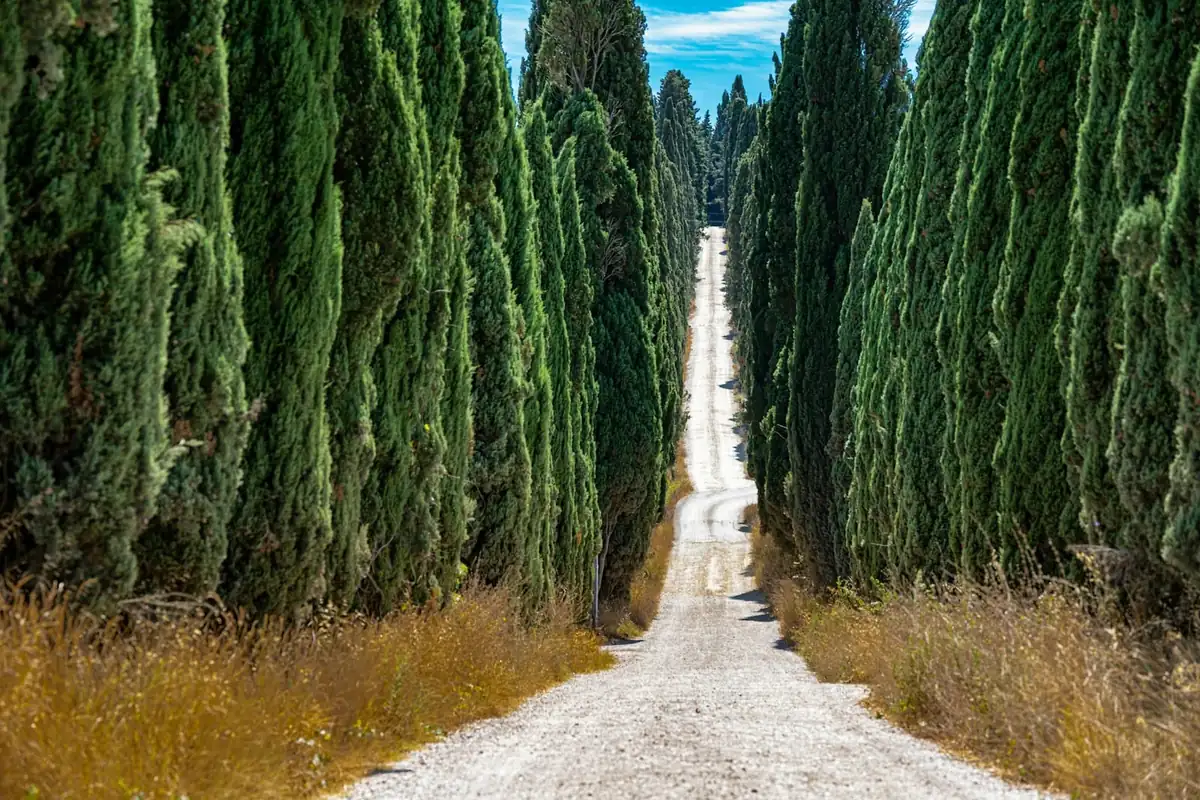
Larnaca to Paphos by Gravel Bike: Cyprus Beyond the Troodos
The last kilometres into Paphos run flat and easy along the coast, which after four days of Troodos climbing feels almost suspicious. You left the mountains that morning at altitude, dropped through forest and open ground, and now the road runs straight toward a waterfront town with the Mediterranean on your right and nothing left to climb. It is, by a wide margin, the easiest finish of the week. It is also, for a lot of riders, the one that makes the whole crossing click into place — because Paphos only means anything in contrast to where you started.
That start was Larnaca, five days and one serious mountain range earlier, on the other side of the island entirely.
A crossing with two coasts and a mountain range between them
The Trans Cyprus Gravel route runs Larnaca to Paphos, east to west across the island — 300 to 375 kilometres over five riding stages plus a rest day near Mount Olympos, with 5,500 to 8,000 metres of cumulative climbing depending on which daily line you ride. The middle of that crossing, through the cedar and pine forest of the Troodos above 1,800 metres, is the part most gravel cyclists picture when they think of Cyprus, and rightly so — it’s genuinely high mountain riding on an island most visitors never associate with altitude. We’ve written about that stretch at length in our guide to gravel cycling in the Troodos Mountains, stage by stage.
This is the other half of the story: the two coasts the mountains sit between, and why starting at one sea and finishing at another changes how the whole week reads.
Larnaca: the coast you leave behind
The crossing opens gently. A short transfer from Larnaca airport — about ten minutes — puts you at the start hotel by midday, in time for an easy intro ride along the coast to settle the travel out of your legs and check the bike over before anything is asked of it. Then a welcome dinner, the first of the week, with a mountain range waiting on the map for the morning.
Day two is where Larnaca actually earns its place in this story. The route climbs off the coastal plain through windmills and limestone cliffs, past Stavrovouni Monastery on its hilltop, and the first white-earth tracks arrive early — loose, bright underwheel, a texture that has nothing in common with the cedar forest roads waiting higher up. Line choice starts to matter almost immediately, which is the point: this stage teaches you how Cypriot limestone behaves before you’re deep enough into the mountains for a mistake to cost much. The Adventure line covers 56 km with 950 m of climbing; the Explorer line runs to 60 km and 1,400 m. By the end of the day the sea is well behind you and the country has turned properly mountainous.
What Larnaca gives the crossing, in other words, isn’t just a start line. It’s the introduction to a surface — limestone, loose, sun-bright — that the rest of the week builds on, and a monastery on a hilltop that marks the exact point where the island stops being a coastal plain and starts being a mountain range.
Paphos: the coast you reach
Five stages and a rest day later, the route comes back down to sea level a different way. The final stage runs from Lysos, a village on the western flank of the Troodos, through forest and open landscape before the country opens out toward the coast — a line chosen for the experience rather than the most direct route, threading toward the Akamas peninsula’s headland trails before the waterfront at Paphos closes the crossing. It’s shorter than most of the week’s stages and gentler too: 67 km and 600 m of climbing on Adventure, 72 km and 900 m on Explorer.
The character is different from Larnaca’s limestone in a way you notice immediately. Where the climb out of Larnaca was about learning a loose, technical surface, the run into Paphos is about the landscape opening rather than closing in — coastal and headland trails replacing forest track, sea air replacing the resin smell of cedar, and a final stretch of waterfront that has none of the exposure or technicality of the mountain stages. Your last night is spent in a small hotel by the Mediterranean, the closing dinner ahead of you and a full crossing behind.
It’s worth saying plainly: Paphos is an easy day by the standards of the week, and that’s deliberate. After a summit stage near 2,000 metres and a rest day spent reloading rather than resting completely, finishing on the island’s least demanding terrain lets the crossing end on arrival rather than survival.
Why the ends need the middle, and the middle needs the ends
None of this works as a two-part story, though — Larnaca and Paphos only carry the weight they do because of what sits between them. Kapedes to Agros, on day three, is some of the finest riding of the week: fine gravel and long ridgeline views with the north coast appearing and disappearing. Agros to Troodos, on day four, is the mountain day proper, gaining altitude steadily into the cedar zone where the air cools and the gravel loosens as you climb toward the 2,000-metre range. There’s a genuine rest day near Mount Olympos in the middle, placed deliberately rather than as an afterthought, and then the long descents from Troodos to Lysos on day six — the reward stage, fast gravel and constantly changing landscape after three days of steady climbing.
We cover that middle stretch properly in the Troodos guide — the terrain, the April wildflowers at altitude, the bike and kit choices that suit it. What matters here is the shape of the whole thing: a week that starts at one sea, climbs into serious mountain terrain for three days, and comes back down at a different sea entirely, on a different surface, with a different feeling in your legs. Few routes this compact manage that particular arc — salt air at breakfast, cedar forest by midweek, a different coastline for the closing dinner, all inside a single week and all under your own legs.
Riding both ends well
A few things that make the difference at either coast:
- Treat the Larnaca climb as a skills day, not a warm-up. The white-earth limestone above Larnaca is genuinely technical in places — line choice on loose surface, not raw effort, is what the day is teaching you. Ride it with attention and the rest of the week’s limestone sections feel familiar rather than new.
- Run tubeless from the start. Both the Larnaca limestone and the rockier sections nearer Paphos reward it; a minimum 38 mm tyre, wider if you can manage it, is the baseline for the whole crossing, not just the mountain stages.
- Pack for two coasts, not one. April is warm at sea level and cool near the 2,000-metre summit, so a light packable layer and warm gloves earn their place even though the two coastal stages themselves rarely need them.
- Don’t rush the finish into Paphos. It’s the gentlest day of the week by distance and climbing alike. Let it be gentle in pace as well — you’ve done the harder riding already, and the Akamas headland trails deserve to be ridden rather than raced through.
What a supported Trans Cyprus week includes
Both ends of the crossing, and everything between them, run as one supported week — guided or self-guided, your choice each morning. Guided groups are capped at ten riders per guide, who navigates for you; useful on the limestone above Larnaca especially, where the right line through loose rock isn’t always obvious. Self-guided riders take the full GPS route for Garmin, Wahoo and Komoot and ride at their own pace, with the same hotels and support either way.
The week covers seven hotel nights in shared double rooms — from a coastal start near Larnaca airport to a final night in Paphos by the Mediterranean — with seven breakfasts and three dinners, including the closing dinner. Your luggage travels hotel to hotel in the support van, collected each evening rather than delivered to your room, and the van meets the group most days at lunch with a free refill of PurePower energy drink (bars and chews available to buy). A support vehicle carries spare parts, a spare bike and a clothing bag, with mechanic help from the crew — you pay only for parts, at cost. A return transfer to Larnaca on the final morning is included, along with a Gravel-Adventure jersey, a shared online photo album and lifetime membership of the RIDERS network. The full day-by-day and what’s included is on the Trans Cyprus Gravel tour page, and how our tours work explains the supported model in more detail — the two daily pace options, Adventure and Explorer, are laid out on the levels page.
The single 2027 departure runs 24 April to 1 May, from €2,830 — timed for the exact window when the coast is warm and the Troodos summit is clear of the last of the spring cold, with wildflowers along the upper stages.
Two coasts, one crossing
Most island tours pick a loop, or a there-and-back, or simply a base to ride out from. This one is a genuine crossing — you sleep by one sea on the first night and by another on the last, with a mountain range you climbed under your own power in between. Larnaca gives you the technical introduction, the windmills and limestone and the monastery on the hill where the coastal plain runs out. Paphos gives you the release, the Akamas headlands and a Mediterranean waterfront with nothing left to climb. Neither end is the point on its own. Together, with the Troodos rising between them, they’re the whole reason to ride Cyprus coast to coast rather than just up into its mountains and back.
We run this exact crossing once a year on the Trans Cyprus Gravel week — Larnaca to Paphos, guided or self-guided, with the support van somewhere behind you at both ends of the island.
Questions riders ask
Do I need to see the Troodos Mountains to appreciate this route, or is the coast enough on its own?
The mountains are the spine of the crossing and most riders remember them most vividly, but Larnaca and Paphos are not filler either — they're where the week opens and closes, and they set the terms for everything in between. The limestone hills above Larnaca teach you how the surface behaves before the climbing gets serious; the Akamas headland run into Paphos is a genuine change of character after four days at altitude. You get the full arc, not just the middle of it.
Is the terrain the same at both ends of the route?
No, and that's part of what makes the crossing interesting. Leaving Larnaca, the route climbs off the coastal plain through windmills and limestone cliffs — bright, loose white-earth tracks where line choice starts to matter early. Coming into Paphos, the final stage runs through forest and open ground before picking up coastal and headland trails on the Akamas peninsula, a different surface and a different rhythm entirely from the limestone you started on.
How hard are the two end stages, compared with the mountain days?
Gentler on paper, real in practice. Larnaca to Kapedes on day two runs 56 km and 950 m of climbing on the Adventure route, or 60 km and 1,400 m on the Explorer — a proper climb, but well short of the 2,000 m summit day later in the week. The final run from Lysos to Paphos is shorter again: 67 km and 600 m on Adventure, 72 km and 900 m on Explorer, with the climbing largely behind you by the time the Mediterranean comes into view.
Guided or self-guided for the Larnaca–Paphos crossing?
Both run daily, with identical support. An English-speaking guide leads the group each day if you go guided, which is useful on the white-earth limestone near Larnaca where the right line isn't always obvious. Self-guided riders take the full GPS route for Garmin, Wahoo and Komoot and set their own pace. Either way you get the same hotels, the same support vehicle, and the guide or route notes waiting at each end of the day.
What happens on the last morning, after the ride finishes at Paphos?
A return transfer to Larnaca airport, about two hours, runs on the final morning. If your flight is in the evening, there's a voluntary top-to-sea bonus on offer instead: back up to Troodos for one long, connected descent to the coast — a last look at the mountain range you spent the week climbing, ridden downhill this time.
Planning a gravel week of your own?