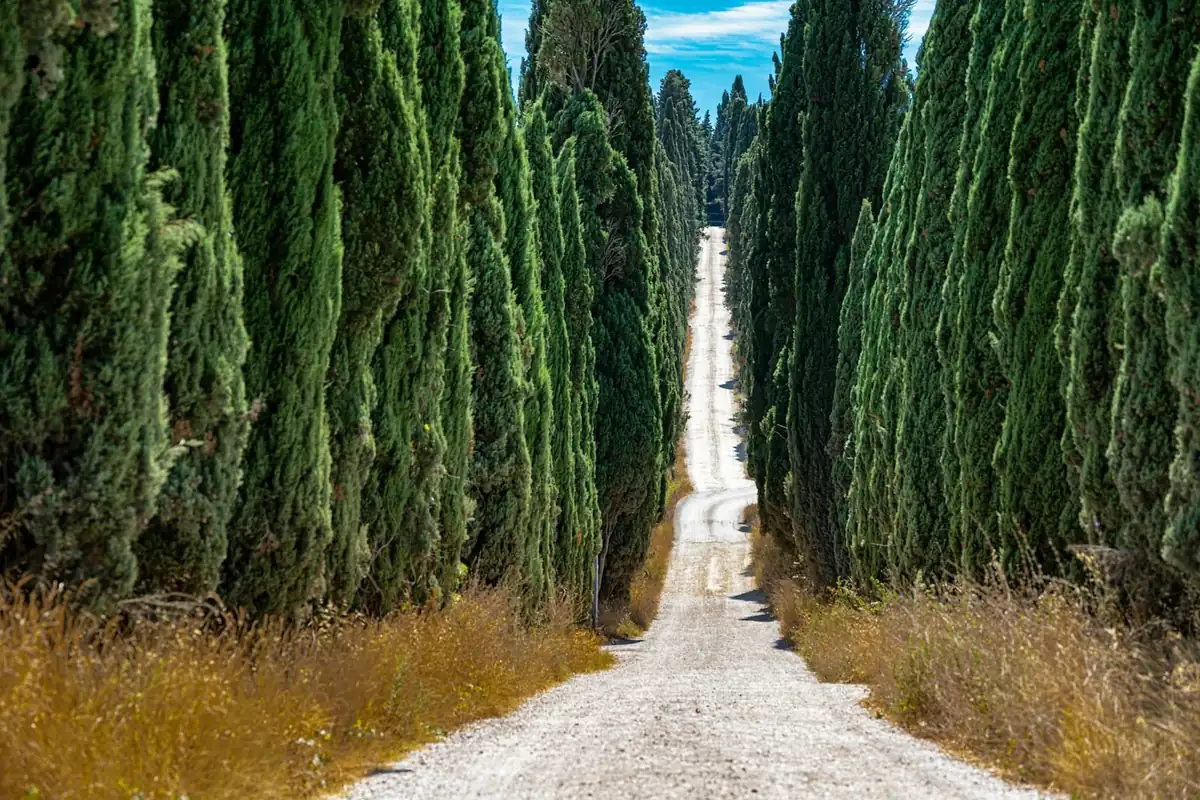
Bike Rental on a Gravel Cycling Tour: What's Actually Possible
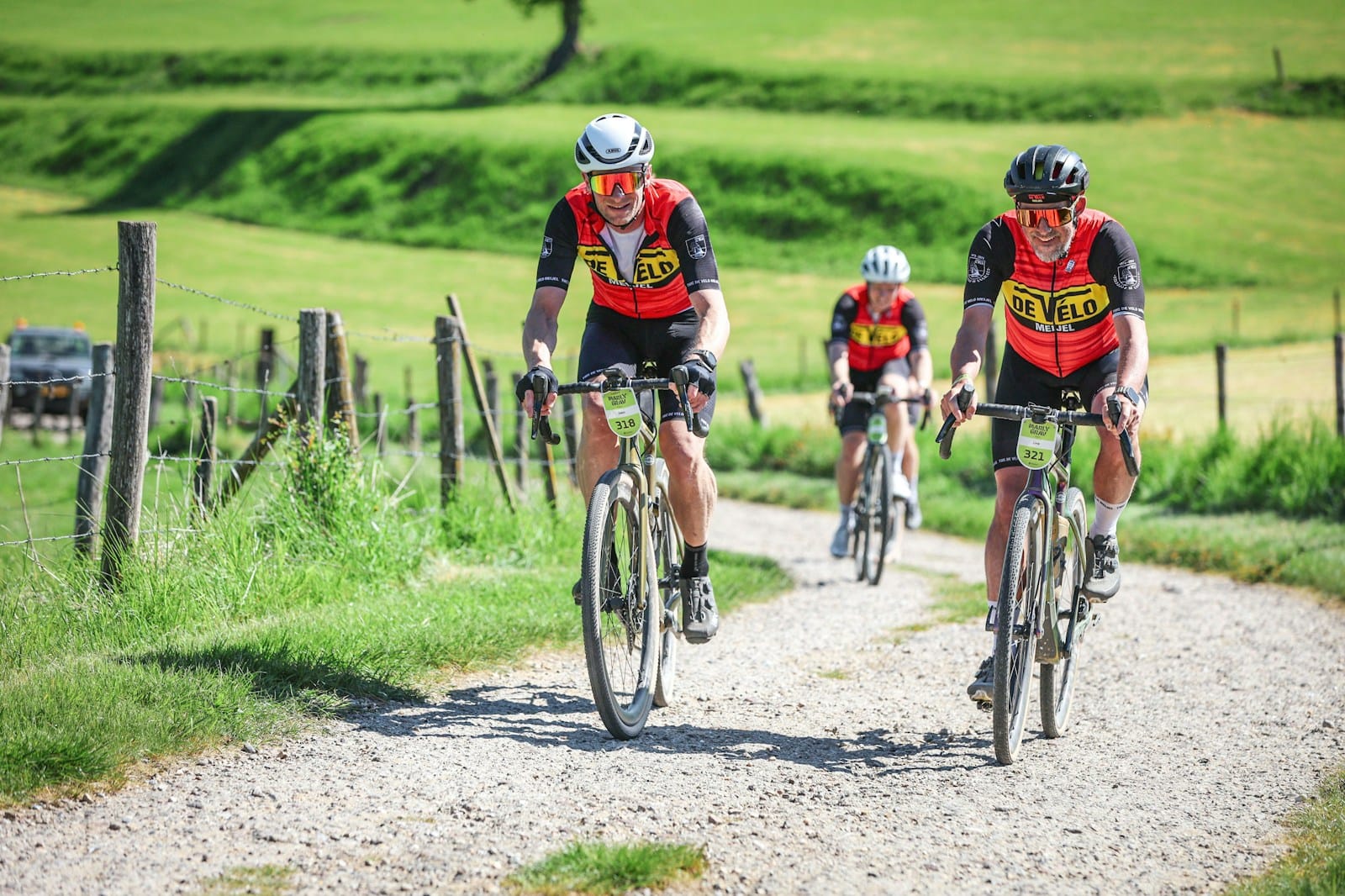
Someone emails us most weeks with a version of the same question: can I just rent a bike out there, rather than fly with my own? It is a reasonable thing to want — a hard case is one more piece of luggage to manage, and not everyone owns a bike worth insuring for the trip. The honest answer is that it depends entirely on which of our seven routes you’re asking about, and the difference isn’t small.
On four routes, renting a touring-ready bike is straightforward, arranged through a local partner or through us. On Cyprus it is possible only in a limited way, and on the remaining two it isn’t offered at all. Knowing which category your route falls into before you book flights saves a late scramble.
Bike rental, route by route
| Route | Bike rental | How it works |
|---|---|---|
| Tuscany | Available | Local partner in Pisa; gravel bike or e-gravel bike, ready at the airport on arrival, returned at the end |
| Trans Algarve | Available | Local partner; delivered to the start hotel, collected from the finish hotel |
| South Africa | Available | Local partner; Scott gravel bikes or MTBs, SPD or flat pedals, delivered to and collected from the start and finish hotels |
| Trans Alp | Available | Gravel bike or e-gravel bike at extra cost; ask us about models and sizes |
| Trans Cyprus | Limited | A limited number of fairly basic gravel bikes through local partners; we recommend bringing your own |
| Trans Pyrenees | Not offered | Bring your own bike as checked baggage |
| Scotland | Not offered | Bring your own bike as checked baggage |
Four routes out of seven, in other words, with Cyprus somewhere in between — not the narrow handful you might expect if you’d heard this only applies to the easier destinations.
Where rental is available
Tuscany. We can arrange a gravel bike or e-gravel bike through a local partner in Pisa. It’s ready for you at the airport on arrival and returned at the end of the week, so you can fly in with nothing but kit and shoes. Rental is an additional cost on top of the tour price — ask us about specifications before booking, since the fleet and pricing sit with the partner rather than on our own tour page.
Trans Algarve. Our long-term, reliable local partner delivers the bike to the start hotel and collects it from the finish hotel, so there’s no airport handoff to coordinate. We send the full rental details once you’ve booked the tour.
South Africa. Through a local partner you can rent Scott gravel bikes or MTBs, with SPD or flat pedals. The bike is delivered to the start hotel and collected from the finish hotel, which takes a good deal of weight off a long journey when the bike would otherwise be the heaviest thing you check in.
Trans Alp. Rental is available here too: a gravel bike or an e-gravel bike, at extra cost. Ask us about models and sizes before you book.
Where rental works with a local partner, it is because there is an established cycle-tourism trade — shops used to fitting and servicing gravel bikes for visiting riders, not just road or mountain bikes for locals. That is a narrower thing than “good cycling destination,” and it is the reason the remaining routes don’t have it, not a lack of trying on our part.
Cyprus: limited, and worth planning ahead
On Trans Cyprus we can usually arrange a limited number of fairly basic gravel bikes through local partners. We recommend bringing your own bike. If you would still like to rent, make the request when you book, and we send you the options 1–2 months before departure.
Where it isn’t — and why that’s fine
Trans Pyrenees and Scotland have no rental, so you bring your own bike as checked baggage. A gravel-specific rental fleet near a start point like Fort William or San Sebastián would need enough passing trade in exactly the right kind of bike to justify itself, and on these two routes that trade doesn’t exist yet at any price point we’d feel comfortable sending you to. Rather than hand you a rental shop we can’t vouch for, we’d rather tell you plainly: bring your own.
In practice that means a hard case and checked baggage, the same way most riders already travel with a bike for any trip abroad. The one exception is guests travelling from Denmark, where our own support vehicle departs from and can carry your bike — everyone else brings it as luggage. Our separate guide to flying with a gravel bike covers the packing, airline fees and insurance side of that in full, step by step — this piece is specifically about where renting is and isn’t realistic, not how to pack a bike box.
The bike itself, rented or your own
Whichever route you’re on and however the bike gets there, the specification doesn’t change: a gravel bike or e-gravel bike, or a light MTB with suitable tyres and gearing. Road bikes and hybrids aren’t suitable for any of our terrain. Minimum 38mm tyres — wider is better on the rougher stages — tubeless strongly recommended, and a low gear around 0.9 for the steeper climbs. If you’re renting, say so when you ask about specifications; if you’re bringing your own, have it freshly serviced before you fly, since a mechanical issue on day one is a worse start than a day spent packing a bike box.
Either way, you’re not on your own with it for the week. The support vehicle carries tools, spares and a complete spare bike on every route, and the guides do the mechanical work — you pay for parts, at cost, not labour. What they can’t reasonably stock is bike-specific parts for ten different machines, so bring your own rear derailleur hanger and a quick link matching your chain speed regardless of whether the frame under you is rented or your own.
What this means for booking
If you’re weighing Tuscany, the Algarve, South Africa or Trans Alp against the other routes and renting matters to your decision, it’s a genuine point in their favour — you can book flights without thinking about a bike box at all. If your heart is set on the Highlands or the Pyrenees, the bike-box logistics are simply part of the trip, the same as they would be travelling with your bike anywhere else, and on Cyprus we’d suggest the same. Neither path is the wrong one; it’s worth knowing which one you’re on before you commit to flights.
For the wider planning picture — what’s included, how guided and self-guided riding actually differ, and the pace options on each route — our how it works page covers the rest of what a week with us looks like. Whichever bike you turn up on, the hotels, the support vehicle and the route itself don’t change.
Questions riders ask
Can I rent a gravel bike for a Gravel Adventure tour?
On four of our seven routes, yes: Tuscany, the Algarve, South Africa and Trans Alp. Cyprus has a limited number of fairly basic gravel bikes through local partners, so we recommend bringing your own. On Trans Pyrenees and Scotland there is no rental, so you bring your own bike as checked baggage.
Why can some routes offer rental when others can't?
It comes down to whether a local operator stocks a fleet of touring-ready bikes near our start point. Pisa, the Algarve and the Cape have an established cycle-tourism trade, with shops that rent and service bikes to visitors; the Highlands and the high Pyrenees don't have the same density of that specific trade, even though both are superb cycling destinations in their own right.
What does rental actually include, and what does it cost?
On Tuscany, a gravel bike or e-gravel bike is ready at Pisa airport on arrival and collected at the end. On the Algarve, the bike is delivered to the start hotel and collected from the finish hotel. In South Africa, a local partner supplies Scott gravel bikes or MTBs with SPD or flat pedals, delivered to and collected from the start and finish hotels. On Trans Alp you can rent a gravel bike or an e-gravel bike. Rental is an additional cost on top of the tour price, so ask us about models, sizes and current pricing before booking.
How does rental work in Cyprus?
Through local partners we can usually arrange a limited number of fairly basic gravel bikes. We recommend bringing your own bike. If you would like to rent, make the request when you book, and we send you the options 1–2 months before departure.
If I can't rent, how do I get my own bike there?
As checked baggage, in a hard case — airlines generally treat it as standard oversized luggage, and a hard case makes the whole trip more straightforward than a soft bag. We don't offer bike transport ourselves (the one exception is guests travelling from Denmark, where our own support vehicle departs from).
What kind of bike should I rent or bring?
A gravel bike or e-gravel bike, or a light MTB with suitable tyres and gearing. Road bikes and hybrids aren't suitable for any of our routes. Minimum 38mm tyres, tubeless strongly recommended, and a low gear in the region of 0.9 for the steeper climbs. Have it freshly serviced before you travel, rented or not.
Planning a gravel week of your own?